Breaking news: The war has just begun.… See more
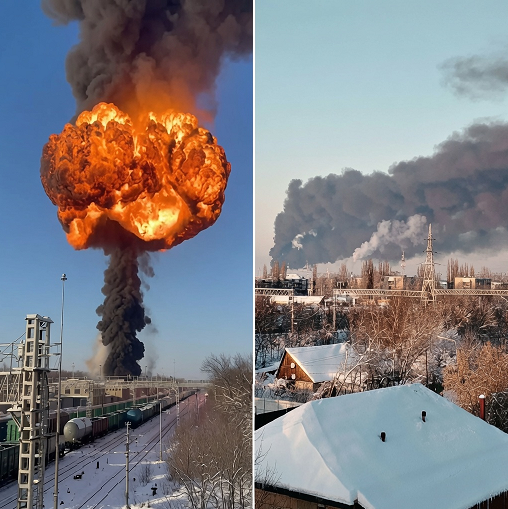
Period of heightened tension in the Middle East as the rivalry between Iran and Israel continues to intensify. The situation has drawn international attention due to concerns about potential risks to nuclear infrastructure in the region, though officials and analysts emphasize that many circulating claims remain unverified and should be treated cautiously until confirmed by authoritative sources.
Public discussion has largely focused on several key facilities associated with Iran’s nuclear program, including the Bushehr Nuclear Power Plant, the Natanz Nuclear Facility, and the Fordow Fuel Enrichment Plant. These sites are central to long-standing international debates over nuclear development, monitoring, and non-proliferation. Commentary has also referenced Israel’s Negev Nuclear Research Center near Dimona, another sensitive facility frequently mentioned in geopolitical analysis due to its strategic significance.
Some online reports suggest that recent military activity and missile exchanges in the region have raised concerns about the security of infrastructure near these sites. However, there is no confirmed evidence of direct breaches or damage to any nuclear facilities. Experts caution that early reports in conflict zones are often incomplete or speculative, and stress the importance of relying on verified assessments from official institutions.
The International Atomic Energy Agency (IAEA) has reportedly been involved in monitoring developments, as it routinely is whenever geopolitical tensions arise near nuclear installations. The agency’s role includes ensuring that nuclear materials remain secure, providing safety guidance, and facilitating international communication on nuclear risks. According to standard procedure, discussions and consultations are expected during periods of elevated regional instability to assess any potential hazards.
Nuclear facilities are generally designed with multiple layers of safety systems to prevent environmental contamination or catastrophic failure, even under stress conditions. International standards established by the IAEA emphasize containment, continuous monitoring, and emergency preparedness. Experts note that while conflict can raise theoretical risks, global oversight mechanisms are designed specifically to reduce the likelihood of nuclear incidents.
At the same time, analysts highlight that modern information environments often amplify uncertainty. Unverified reports can spread rapidly through social media and online platforms, sometimes outpacing official clarification. This makes it difficult for the public to distinguish between confirmed developments and speculation in real time.
As a result, governments, international organizations, and research institutions continue to closely monitor the situation. Diplomatic engagement and behind-the-scenes communication efforts remain important tools aimed at preventing escalation and maintaining regional stability.
In summary, while tensions between Iran and Israel have led to increased global concern—particularly regarding sensitive nuclear infrastructure—there is currently no confirmed evidence of direct damage to nuclear facilities. The situation remains fluid, and the most reliable information continues to come from verified international and governmental sources rather than early or unconfirmed reports.
