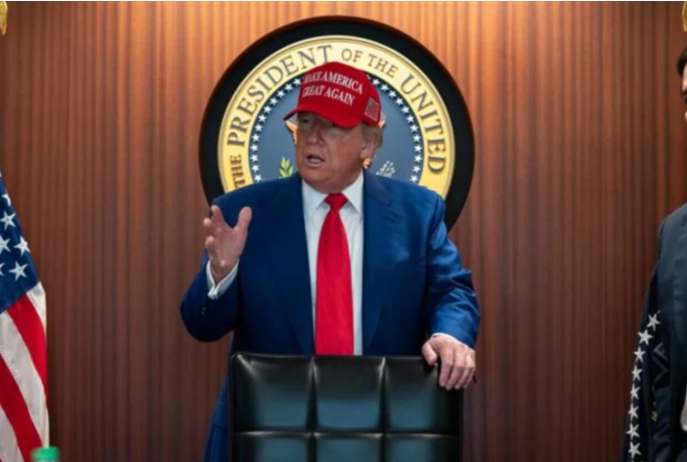
President Donald Trump has indicated that he is preparing to make a “final determination” in the White House Situation Room regarding a proposed memorandum of understanding (MoU) between the United States and Iran. The agreement is intended to extend an existing ceasefire and address broader security and trade concerns, including the reopening of the Strait of Hormuz for unrestricted maritime traffic.
According to White House officials, negotiators from both countries have already reached a preliminary understanding. However, the deal has not yet been formally approved by President Trump, and uncertainty remains over whether Iran has fully accepted its terms. Iranian officials have denied that final approval has been granted, while Israeli sources reportedly believe Iran’s leadership has not yet signed off on the agreement.
Trump has publicly emphasized strict conditions for any final deal, insisting that Iran must permanently abandon any pursuit of nuclear weapons. He also demanded that the Strait of Hormuz be immediately reopened without tolls or restrictions for international shipping. In social media statements, he described provisions reportedly included in the agreement, including the removal or detonation of naval mines and the clearing of shipping routes affected by recent military tensions.
The proposed memorandum reportedly includes a 60-day extension of the ceasefire, during which further negotiations would take place concerning Iran’s nuclear program, including its stockpiles of highly enriched uranium. Trump has stated that these materials would ultimately be “unearthed” and dismantled in coordination with international monitoring agencies. He also noted that sanctions relief or other financial measures would remain on hold until further notice.
Despite these discussions, there is no confirmed indication that Iran has agreed to permanently halt its nuclear ambitions, which remains a central demand of the U.S. administration. The situation remains fluid, with both sides appearing to prefer continued negotiation over a return to open military confrontation.
The broader geopolitical context of the agreement follows months of heightened tensions, including military strikes and exchanges involving the United States, Israel, Iran, and regional partners. These developments have contributed to instability across the Middle East, particularly around critical shipping routes and energy infrastructure.
If finalized, the agreement would represent a temporary stabilization of the conflict, maintaining the ceasefire while leaving major disputes unresolved. For now, the situation remains in a fragile state, with diplomatic talks ongoing and final approval pending from both sides.
